Morocco: A Love Letter in Colour
Updated: Feb 15
What are the top three countries that come to your mind when you think of colour?
For me, it has always been India, Morocco, and Mexico. In these places, colour is not just visual. It is emotional. It lives in the streets, the food, the architecture, and the everyday rhythms of life. I feel incredibly fortunate to have experienced all three in this lifetime.
Morocco, in particular, has inspired artists, designers, and dreamers for decades. The famous Yves Saint Laurent fell so deeply in love with the country that he made it his home. Once you visit, you understand why.
If you have ever seen Morocco on social media, you have probably encountered beautiful riads, steaming tagines, and postcard-perfect images from the Sahara. Our trip had all of that, and then some.
When and Where
We visited Morocco in November 2025, which turned out to be the perfect time. Canada was already slipping into winter, and escaping to a warm, colourful destination felt like the best possible way to prepare for the cold months ahead.
We spent 9 days in Morocco, entering and exiting through Casablanca, and covered:
Casablanca
Marrakech
Merzouga (Sahara Desert)
Fes
We skipped Rabat and Chefchaouen, knowing they deserve a slower, more dedicated trip of their own.
Casablanca: First Impressions and Grand Beginnings
Casablanca eased us into Morocco beautifully. Strong cappuccinos, fresh orange juice, exotic fruit juices, and endless mint tea became part of our daily rhythm. One of our first meals was at La Sqala, complete with live music, vegetable tagines, and a relaxed coastal atmosphere.
Desserts surprised us early on. The thousand-hole pancake paired with live jazz is something we still think about. The city felt alive yet grounded. Fruit trees lined streets, cafés were always full, and even simple train rides felt like part of the experience.
Hassan II Mosque: Faith, Craft, and the Atlantic
The Hassan II Mosque is not just a mosque. It is a statement. Commissioned by King Hassan II and completed in 1993, it was built partly over the Atlantic Ocean, symbolizing the connection between faith, land, and sea.

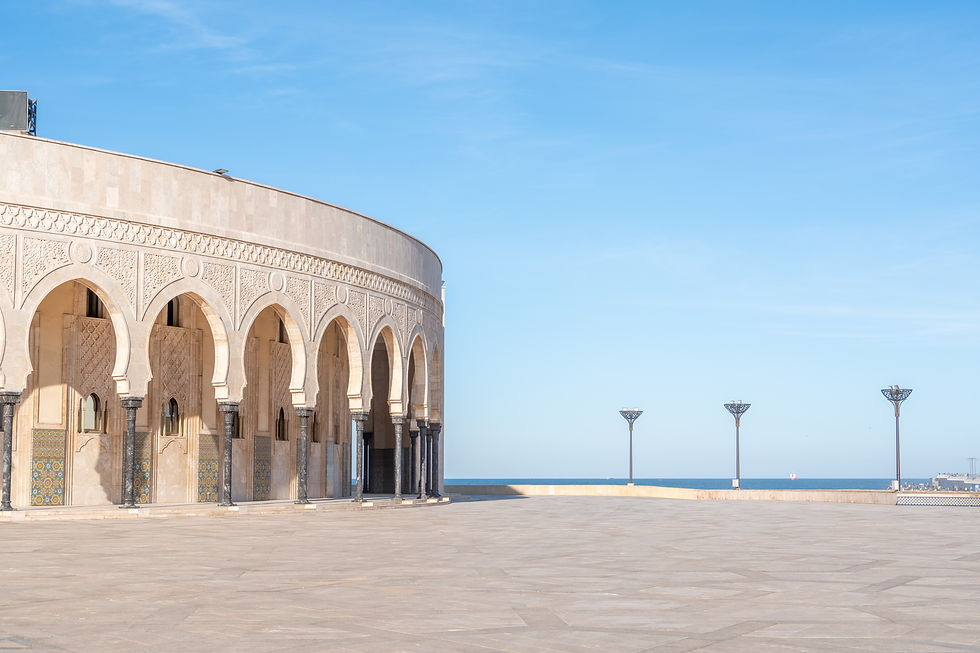
What makes it especially unique is that it is one of the very few mosques in Morocco that allows non-Muslims to visit. Entry is only through guided tours, which we highly recommend. We took the guided tour, and it added immense depth to the visit. Every detail has a story, from the hand-carved cedarwood ceilings and intricate zellige tilework to the marble floors and the retractable roof.
The minaret rises approximately 210 meters, making it the tallest in the world. You can spot it from almost anywhere in Casablanca. Tens of thousands of artisans worked on the mosque, using traditional techniques passed down through generations. Standing inside, you stop taking photos and simply absorb the scale and craftsmanship.
Marrakech: Chaos, Courtyards, and Calm
Marrakech hits you fast. Souks, mopeds weaving through crowds, smoke rising from food stalls, and voices everywhere. Jemaa El Fnaa is chaos in the best possible way.
We wandered through souks, sipped pomegranate juice, ate grilled corn, and admired the stunning interiors of Bahia Palace and Ben Youssef Madrassa. The craftsmanship in these spaces is unreal. Symmetry, light, tilework, and arches that slow you down despite the noise outside.
Shopping added a modern contrast. Zara, Zara Home, Marwa. Somewhere between a banana shake from a tiny dukaan, a matcha latte, and buying Moroccan lipstick, Marrakech started to feel strangely familiar.
And then there were the riads. Hidden behind unassuming doors, they were quiet, lush oases with courtyards, fountains, trees, and pools. After the madness of the medina, stepping into these spaces felt like entering another world. It makes you wonder why we ever stopped building homes like this back in India.

Food: A Win for Both Meat Lovers and Vegetarians
Food was a constant highlight, and it worked effortlessly for both of us despite our different preferences. I am not a vegetarian, while my wife is.
I thoroughly enjoyed traditional chicken and lamb tagines, rich, slow-cooked, and deeply comforting. At the same time, N never struggled to find options. Moroccan cuisine offers an impressive variety of vegetarian dishes that feel natural rather than adapted.
Vegetable tagines, vegetable pastilla, harira soup, lentils, chickpeas, fresh breads fr
om places like Dar Chef, msemen, harcha, roasted vegetables, and vibrant salads made every meal exciting.
Breakfasts were especially memorable. Mixed fruit juices, msemen, oatmeal, pilaf and beans, roasted potatoes, roasted vegetables, yoghurt, fruits, palmier, chocolate bread, grated carrot and beet salads, hummus, and mutabel. Every morning felt like a feast.
Coffee Culture
Not a single bad coffee in the entire country. Even the smallest shops had proper espresso machines and knew exactly what they were doing.
Bacha Coffee deserves a special mention. Yes, it is wild that you have to pay just to enter the café. Yes, it is always packed. And yes, it is still worth experiencing at least once.
The Hammam: Awkward, Ancient, and Surprisingly Amazing
A hammam is a traditional Moroccan bathhouse, deeply rooted in history and culture. Long before modern plumbing, hammams were places to cleanse, relax, and socialize.
One of our friends strongly advised us to avoid public hammams on our first visit, as they can be intimidating if you are unfamiliar with the process. Taking that advice, we opted for a private hammam experience.
It turned out to be the perfect introduction. Steam rooms, black olive soap, intense exfoliation with a kessa glove, and repeated rinses that leave you feeling completely reset. Yes, it is awkward at first. You are vulnerable and very much out of your comfort zone. But once you surrender to the process, it is incredibly relaxing.
You walk out lighter, smoother, and oddly proud of yourself.
Into the Atlas Mountains and the Sahara
Leaving the cities behind was dramatic. The drive through the Atlas Mountains, crossing the Tizi n’Tichka pass, watching olive and pomegranate trees give way to rugged landscapes was unforgettable.
Ait Ben Haddou, the iconic Berber village, felt cinematic for a reason. Visiting a Berber home and sharing simple food grounded the experience in everyday life.


We passed through Ouarzazate, stayed near Dades Gorges, and eventually reached the Sahara.
The desert delivered everything you hope for. Camel rides, quad biking, sandboarding, and sunsets that feel unreal. Nights were freezing, something we underestimated, but sunrise in the Sahara made up for it completely.
Fes: Ancient, Intense, and Authentic
Fes felt timeless. Our arrival was dramatic, followed by a palace stay with dinner and live music.
The medina is a maze. Tanneries, souks, leather workshops, and rug weaving studios reveal craftsmanship that has not changed for centuries. Seeing stunning leather handbags being made using traditional methods was fascinating.
Breakfasts here were next level. Harira soup, omelettes, roasted vegetables, fruits, and local breads. Some dishes I loved, some I did not, but all of them felt deeply authentic.
A quick mall visit reminded us we were still in the present before boarding the train back to Casablanca.
The Small Things
Morocco is also about the little moments. Cats everywhere. Mopeds squeezing through impossible gaps. Henna being applied in a town square. Fresh bread, yoghurt, matcha lattes, and fruit juice at odd hours.
Even the journey back ended quietly. A flight to Montreal and a butternut squash toast with caramelized onions somewhere along the way. A calm end to a loud, colorful journey.
What Could Have Been Better
No trip is perfect.
More reliable app-based taxi services would make getting around easier.
Aggressive vendors and touts can be overwhelming, though years traveling through Southeast Asia helped us navigate it better.
Final Thoughts
Morocco is intense, beautiful, exhausting, and rewarding all at once. It challenges you, feeds you well, overwhelms you, and then calms you down.
If you love color, contrast, culture, and a little chaos, Morocco does not just belong on your list. It stays with you long after you leave.
Comments